
Feeling more swollen at the end of the day, waking up with a heavy face, or noticing retention marks are common issues. During these times, many people seek out home lymphatic drainage methods to relieve discomfort, improve body contour, and maintain a sense of lightness between sessions. The issue is that not every technique found online truly replicates the effect of a professional session – in some cases, too much pressure or incorrect execution can do more harm than good.
When Home Lymphatic Drainage Can Help
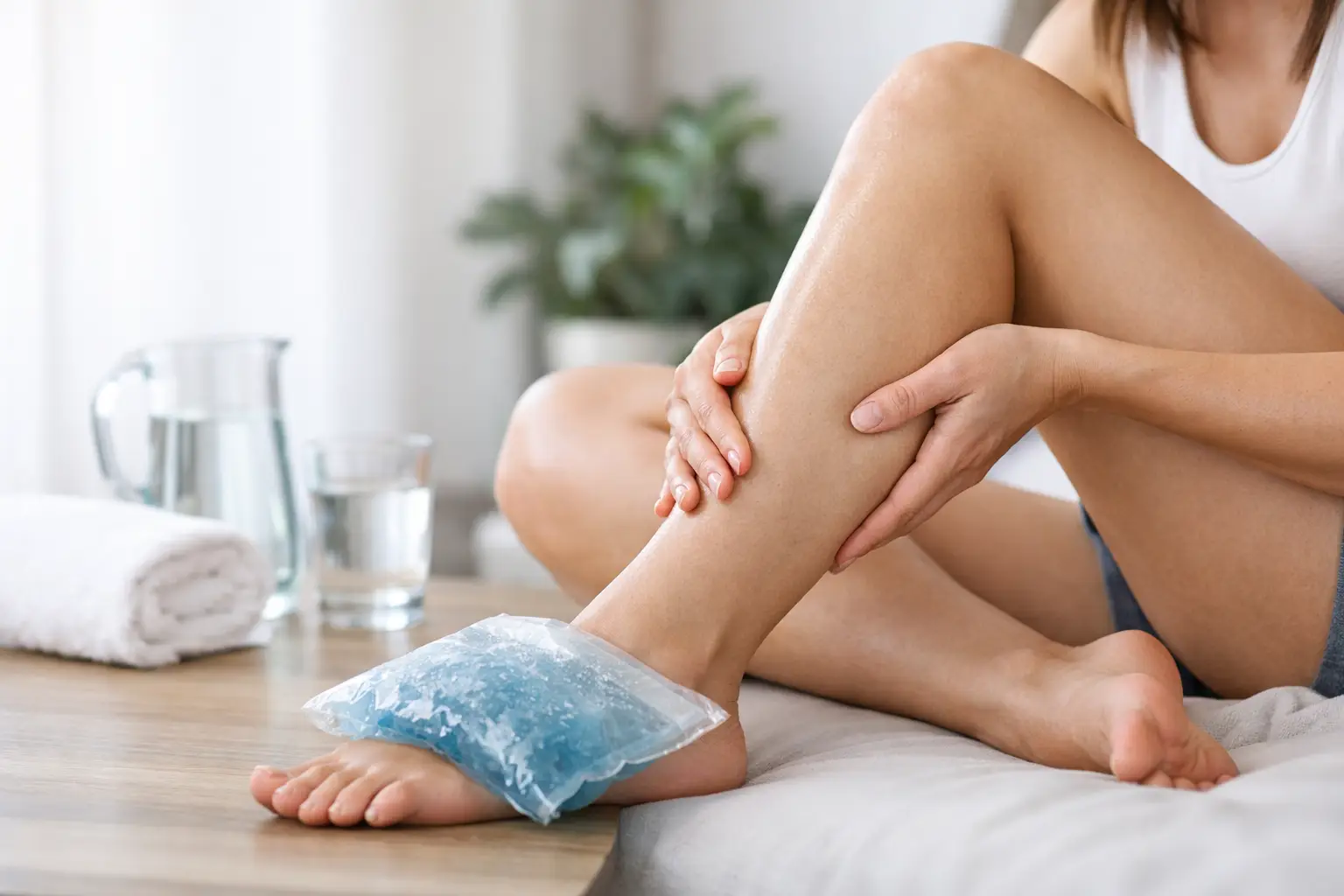
Home drainage can be useful as a complementary care method, especially for those experiencing mild swelling, spending long hours sitting, undergoing hormonal changes, or wanting to foster self-care habits. When properly guided, it can provide a sense of relief, promote the feeling of lightness, and temporarily aid local circulation.
However, it is crucial to manage expectations. What you perform by yourself at home typically has a softer and more limited effect. Professional drainage follows a technical logic, with correct movement direction, specific rhythm, appropriate pressure, and individual assessment. This influences the result significantly, especially when the goal includes more efficient de-swelling, improving body contour, or meeting specific demands like post-surgery recovery.
In other words, self-application can serve as maintenance, not as an automatic replacement for professional treatment.
What Lymphatic Drainage Really Does
Lymphatic drainage is a manual technique aimed at stimulating the lymphatic system, which helps eliminate fluids and metabolic waste from the body. When done correctly, it improves lymph outflow, which can reduce edema, relieve the sensation of heaviness, and contribute to a less swollen appearance.
Practically, this is usually noticed in areas such as the legs, abdomen, arms, and face. Many clients also report improvements in well-being and body comfort. However, visible results depend on various factors: routine, diet, water retention, menstrual cycle phase, recent surgery, and even the type of touch used.
Therefore, quick videos and promises of immediate results in any context need cautious consideration. Technique matters – a lot.
How to Safely Perform Home Lymphatic Drainage
If the idea is to incorporate this care into your routine, the first point is to abandon the notion of strong massage. Drainage should not be painful. Aggressive movements, intense squeezes, and attempts to "break" arm swelling can irritate the tissue and have the opposite effect.
The ideal approach is to use gentle, slow, repetitive movements, respecting the drainage path without pressuring sensitive areas. Before starting, it’s advisable to clean the skin, choose a quiet time, and use a small amount of cream or oil only if it helps the hand glide. Too much product might make the hand slip too much and lose touch control.
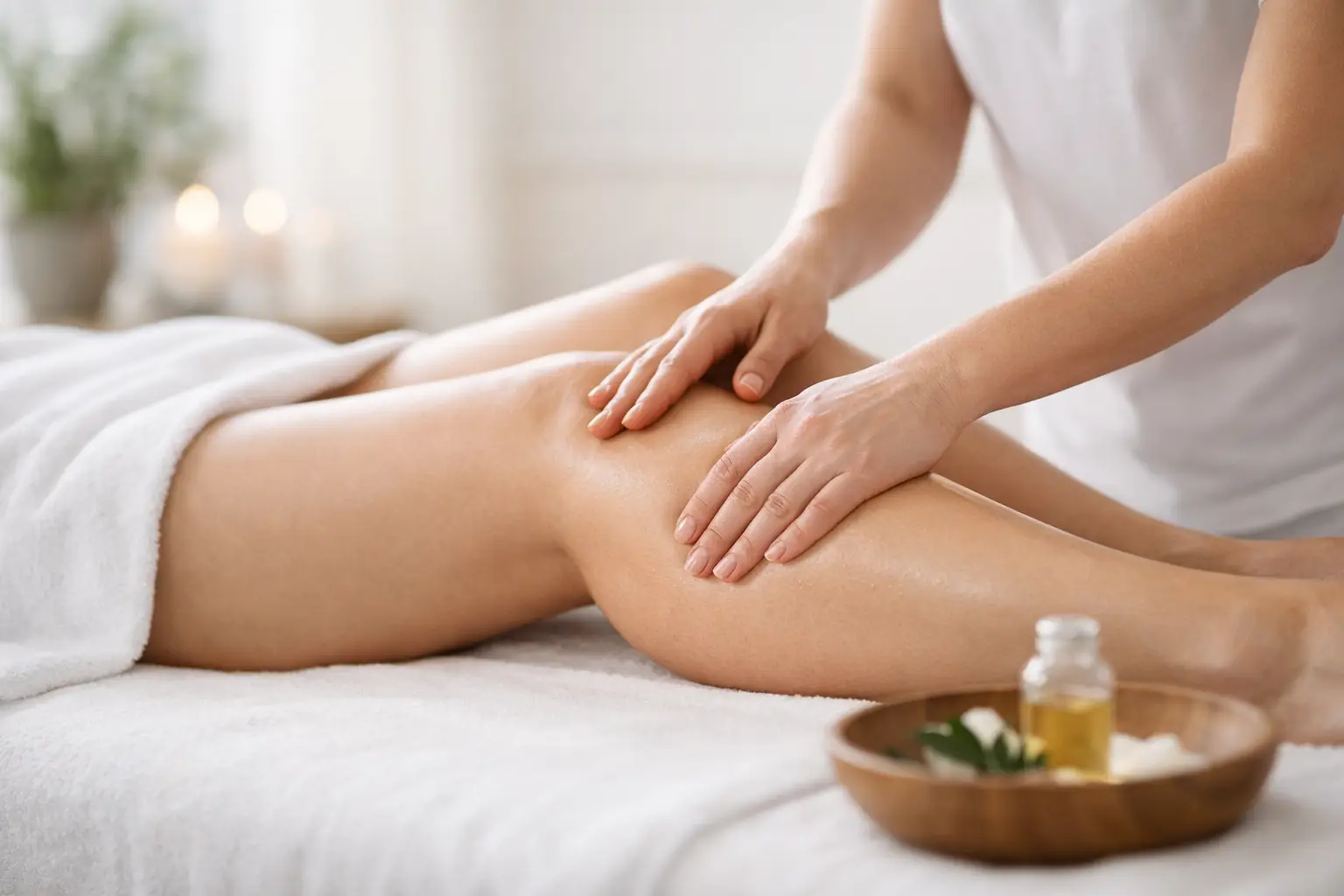
On the abdomen, for example, the care should be delicate and always comfortable. On the legs, movements usually follow an upward direction, without excessive pressure. On the face, lightness is even more important because the area is more sensitive and responds better to precise stimulation than to intense friction.
A short session, 10 to 15 minutes, makes more sense than insisting for a long time with tiresome execution without technique. Regularity tends to be more helpful than intensity.
Common Mistakes in Self-Application
The most frequent mistake is confusing drainage with modeling techniques. They serve different purposes. Modeling works with more vigor and another objective. Drainage requires smoothness and direction. When mixed up, people believe the stronger, the better, which isn’t true.
Another common mistake is making random movements, not respecting the drainage path. It's also common to insist on painful areas, with bruising or increased sensitivity. Post-surgery, this risk rises significantly. In this phase, improvisation doesn't align with safe recovery.
Some also use devices, suction cups, or accessories without proper guidance. A seemingly modern tool is not always the most indicated. In aesthetics and tissue recovery, correct technique often outweighs the abundance of tools.
When Not to Do Drainage at Home
Not every swelling should be treated with self-application. If there is significant pain, redness, localized heat, shortness of breath, sudden edema, or suspicion of circulatory change, the solution isn't trying to fix it alone. Medical evaluation is needed.
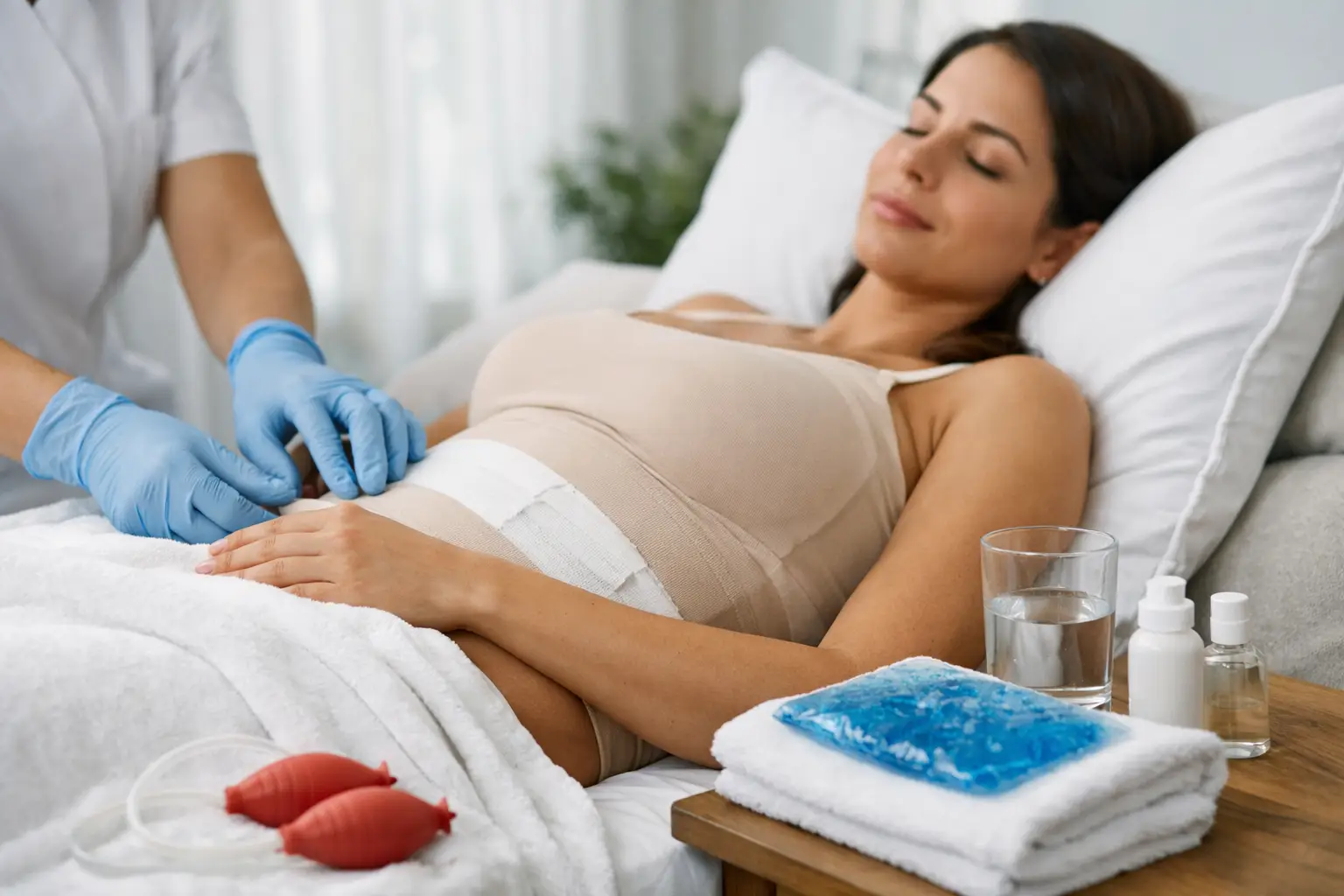
In post-surgery cases, extra caution is essential. Post-surgical drainage requires knowledge about the surgery type, recovery time, tissue condition, and specific care for each phase. Home lymphatic drainage in this context, without professional guidance, can compromise comfort and even interfere with recovery.
Pregnant women, people with vascular conditions, infections, fever, or uncompensated diseases also need evaluation before any maneuver. What seems simple online might not be suitable for your situation.
Does Facial Drainage Work for De-swelling?
On the face, home drainage is frequently sought after because facial swelling is quite bothersome. The eye area, cheeks, and jawline are points where retention shows easily, especially after sleepless nights, excess sodium, hormonal changes, or stress periods.
A light facial drainage, done with technique and consistency, can indeed help improve the sensation of a heavy face and the swollen look. But again, it’s not about force. The face responds better to gentle and well-directed movements. Pressing too hard can irritate the skin, sensitize vessels, and even worsen the appearance momentarily.
When clients seek more refined de-swelling, with better facial definition and safe technical execution, professional treatment makes a clear difference. Specific protocols, like those inspired by recognized aesthetic methods, offer a maneuver standard that self-application alone rarely achieves.
What Truly Enhances the Results
Drainage, whether professional or as a home complement, works best when part of a broader context. Adequate hydration, a less sedentary routine, a balanced diet, and quality sleep directly affect fluid retention. Sometimes people perform the maneuver correctly but maintain habits that favor daily swelling.
It’s also worth paying attention to your own body. There are times when edema intensifies, like pre-menstrual periods, very hot days, or after standing long hours. Understanding this pattern helps use drainage more intelligently, without unrealistic expectations of identical results throughout the month.
In professional follow-ups, this individual reading is a significant advantage. No two bodies respond the same, and personalizing care usually yields more consistent results.
Self-Care or Professional Treatment?
It doesn’t need to be a strict choice between one or the other. For many, the best strategy is combining both. Home drainage can serve as support between sessions, especially during moments of mild swelling and well-being maintenance. Meanwhile, professional treatment is often the best choice when there’s a more defined aesthetic goal, persistent retention, need for post-surgery follow-up, or pursuit of more noticeable results.
This professional care also offers something the home environment doesn’t deliver with the same precision: evaluation. Not all swelling is the same, not every client needs the same protocol, nor does every pressure bring benefit. When technique, experience, and clinical observation are present, treatment becomes safer and more effective.
In a specialized session, like those conducted by Patricia Silva in Brasília focusing on drainage and recognized manual aesthetic protocols, the aim isn’t just performing maneuvers. It’s understanding what your body is indicating and applying the most suitable technique for that moment.
Is It Worth Trying?
It is, provided expectations are properly set. Home lymphatic drainage can be an intriguing resource to relieve mild swelling, cultivate self-care, and maintain a sense of lightness in routine. It doesn’t replace professional technique in cases requiring precision, follow-up, or more expressive results but can be an ally when performed with gentleness, regularity, and common sense.
If your body is asking for less retention, more comfort, and care that genuinely respects your phase, start with well-executed basics. And when you notice a need for results beyond what you can achieve at home, seeking specialized hands is usually the step that transforms a sensation into a visible result.