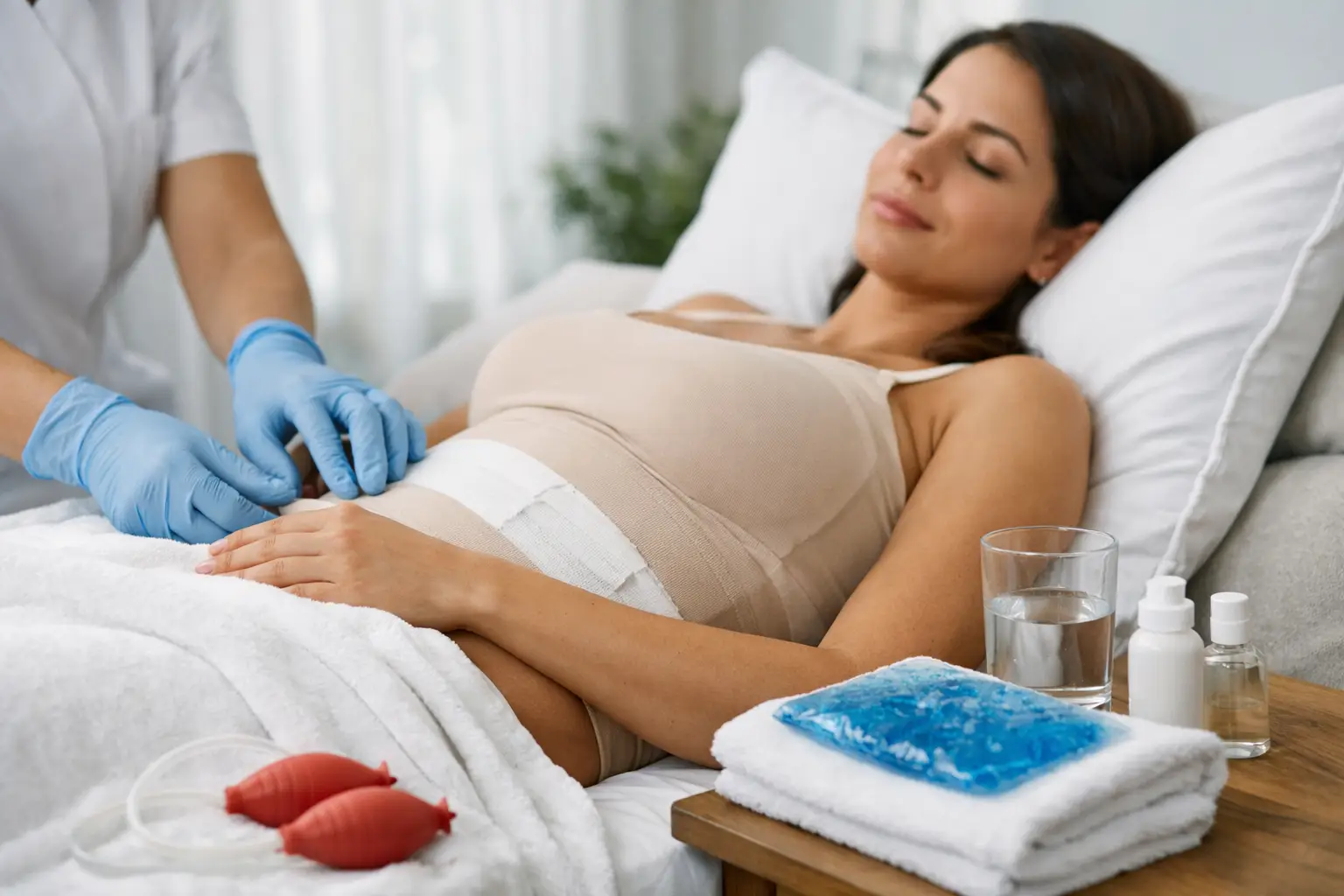

Many people seeking sessions because they feel bloated, with tight clothes and a heavier body often ask the same question: does lymphatic drainage help you lose weight? The honest answer is that it doesn’t aid weight loss in terms of body fat elimination. However, it can reduce swelling, improve contour, and make your silhouette appear lighter, even after the first few sessions.
This distinction matters because many confuse losing bloating with losing weight. They are different in practice. When your body retains fluid, you feel a sense of volume, weight, and discomfort. By stimulating the lymphatic system with a well-executed technique, this excess fluid tends to be mobilized, improving measurements, body definition, and well-being.
Does Lymphatic Drainage Really Help with Weight Loss?
Lymphatic drainage mainly works in managing fluid and supporting lymphatic circulation. This means it helps the body eliminate excess retention, reducing edema, and improving the appearance of areas that tend to swell more, such as the abdomen, legs, arms, and waist.
Hence, it’s common for clients to notice their clothes fitting better, a less bloated belly, and a more sculpted body. This visual outcome can be significant, especially during hormonal retention phases, a sedentary lifestyle, sodium-rich diets, long periods of sitting, or post-surgery. Still, this effect doesn’t represent direct fat loss.
Body fat decreases with a caloric deficit, consistent habits, and often a combination of adjusted diet, physical activity, sleep, and professional guidance. Lymphatic drainage acts as an ally. It doesn’t replace the process but can significantly improve body perception and favor a less bloated and more defined appearance.
What Lymphatic Drainage Actually Does to Your Body
When the technique is done correctly, with appropriate rhythm, pressure, and direction, the lymphatic system receives a stimulus that promotes the drainage of the accumulated fluid in the tissues. This tends to relieve the feeling of weight, discomfort, and edema.
Besides this effect, many clients report improved circulation, a feeling of lightness, and relaxation. In aesthetic protocols, the most valued benefit usually is the visible reduction in bloating. In therapeutic protocols, such as post-surgery, the focus is different: supporting tissue recovery and controlling edema safely and technically.
In the Renata França Method, for example, the approach is lymphatic drainage with specific maneuvers, firm pressure, and a faster pace, aiming for a perceptible result in body contour. It’s a method known for delivering a more apparent de-bloating and shaping effect, given there is proper indication and execution.
When it Seems like You’ve Lost Weight
There are situations where body volume is more related to retention than actual fat gain. This is common in women who experience hormonal fluctuations, stressful routines, low water intake, or inflammatory diets. In these cases, the body may respond very well to drainage, and the difference in the mirror can be surprising.
There’s also the instance of those already in a weight loss process who use drainage as a complement. Then, indeed, the impression of thinning can become even more apparent. As swelling decreases, weight loss results become more visible. The waist defines, the belly is less bloated, and the legs feel lighter.
In conclusion, drainage doesn’t burn fat, but it can enhance the results of those already taking comprehensive care of their body. That’s why many people associate the procedure with weight loss.
How Many Sessions Until Lymphatic Drainage Shows Results?
This is another common question, but the answer depends on the cause of body volume. If the main issue is fluid retention, one session may already bring noticeable improvement. If there is a constant tendency to swell, results are usually better with regular frequency.
If the expectation is to lose localized fat solely with drainage, the treatment won’t fulfill this role. In such cases, aligning expectations from the start is most responsible. A good aesthetic service doesn’t sell exaggerated promises. It explains what the technique actually delivers.
The ideal frequency varies according to the goal, routine, diet, hormonal phase, and specific issues like post-surgery or persistent edema. Some clients benefit from weekly sessions. Others need a more intensive strategy for a period. Individual evaluation makes a difference.
Factors Influencing the Result
The effect of drainage isn’t solely dependent on the session. The body responds better when certain habits go along with the treatment. Adequate hydration, a less inflammatory diet, reduced sodium intake, movement throughout the day, and minimally regulated sleep all help significantly.
If the client does drainage and simultaneously spends many hours sitting, drinks little water, and maintains a routine that fosters retention, the result tends to last less. It doesn’t mean the procedure didn’t work. It just means that the body continues receiving stimuli promoting new fluid accumulation.
It’s also worth remembering that each body responds differently. Some people de-bloat very easily. Others have more resistant retention, especially when there is a hormonal, circulatory or post-surgical component. Technique and regularity matter, but bodily individuality matters a lot too.
Who Benefits the Most
Drainage is often sought by women who feel bloated in the abdomen, legs, and arms, especially in phases of increased retention. Those who spend a lot of time standing or sitting, travel frequently, or feel heavy legs usually notice significant relief.
In post-operative cases, the indication must be even more stringent. At this stage, it’s not about conventional aesthetic drainage aimed solely at contouring. The focus is to help control edema, aid recovery, and ensure patient comfort, always respecting the surgical moment and the appropriate conduct for each case.
Some also seek the technique before events, trips, or photo shoots precisely for the effect of de-bloating and enhancing body contour. It’s an appealing option when the goal is to improve appearance quickly and non-invasively.
What Lymphatic Drainage Doesn’t Do
Here is where expectations need grounding. Drainage doesn’t eliminate localized fat, doesn’t replace a balanced diet, and doesn’t work miracles on its own. It also shouldn’t be seen as a solution for any increase in body volume without evaluation.
If there is significant flaccidity, fat accumulation, or multifactorial aesthetic concerns, the care plan needs to be more comprehensive. Often, the best result comes from combining techniques, a healthy routine, and proper monitoring. The role of drainage is very valuable but needs to be understood within a realistic context.
Promising weight loss as an automatic consequence of drainage oversimplifies what happens in the body. And excessive simplification, in aesthetics, almost always leads to frustration.
How to Know if It's Worth It for You
If your main concern is bloating, a sense of heaviness, retention, and loss of body definition over the week or menstrual cycle, drainage might make a lot of sense. If your aim is to see your body less voluminous and lighter, it usually delivers a very satisfying result.
If your goal is to lose weight with a real reduction in fat, drainage should be seen as a supporting act, not as the main treatment. In that situation, it helps improve contour, comfort, and aesthetic perception of the process but doesn’t replace what truly promotes fat loss.
A serious service starts with an honest conversation. In a specialized space, like Patricia Silva's work in Vicente Pires, the tendency is for the client to receive individualized guidance, without unrealistic promises, focusing on what the body truly needs at the time.
The right question might not just be if lymphatic drainage helps lose weight. Perhaps it is: does your body need to lose weight, or does it need to de-bloat? When that answer becomes clear, choosing the right treatment is also more straightforward—and much more effective.
If you find your body changes volume easily, that your belly bloats, your legs feel heavy, and clothes tighten even without real weight gain, focusing on retention might significantly change how you see yourself and your well-being.